Showing posts with label history. Show all posts

Thursday, August 22, 2013

The Twins

Quirky Coincidences of History

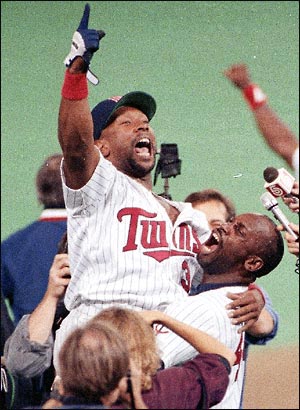
Do you remember who won the World Series in 1991?  Wait, let’s take a step back.  Do you know who won the World Series last year?  Do you follow baseball at all?  Maybe it’s not about the sport or the teams or the scores or the victors or the spoils.  Maybe you’re not good with dates.  Many of my friends defy my geeky logic and profess to not being history buffs primarily because they cannot remember all those names and dates and places.  But I argue that historic moments cannot be rhetorically remembered by names and dates and locations, but rather by the circumstances of the events that help to remind us of the salient details.

President James K Polk (do we all remember that name?), the Commander-in-Chief during the Mexican/American War (do we remember the year that ended?), happened to mention in his State of the Union address that a spot in the American West (do you recall the place?) happened to produce a golden nugget – a nugget that would transform the United States’ destiny.  And that valuable mineral propelled people with promises of prosperity westward spurring the largest stampede that defined the growth of the 19th century American West.  And how do I remember the key names and dates and places?  Easy: San Francisco, a city located west of the South Fork of the American River, hosts the National Football League’s 49ers named for the year those money-hungry settlers arrived en masse and that's the year of the California Gold Rush.  The year before that, 1848, the United States acquired the land that became the Golden State at the end of the Mexican/American War.  The year after, 1850, California had boomed in a transition from territory to state faster than any other in America’s history because of the rush of folks to the tantalizing gold fields.  And as for President Polk, his middle name, Knox, in one of the fun, quirky coincidences of American history, happens to be the same name as the site of America’s gold depository at Fort Knox.

My Mnemonic Device

Leaning history stems from more than clever coincidences, the memorization of facts, or even the names of NFL teams.  Our memories makes history truly magical and remarkable.  We recall the date of Pearl Harbor because our president (do you know which one?) told us the date would live in infamy.  Our children will remember the events of 9/11 because it may be their earliest memory of American history.  But not all history is tragic, or monumental, or even memorable to everyone.  Take the World Series of 1991.  If you are not from Minnesota, even a baseball fan may not recall the final outcome of that year’s playoffs, and while I am an aficionado of the sport, I would be unable to recall who won the October Classic in 1990.  I remember that particular year, though, (and similarly why I remember the winners in 1992) the way many people recall history – by having been there.

During the summer of 1991, I drove with my son (see “Rapid City, Rapid Change,” November 2011) from Denver, Colorado to the Upper Peninsula of Michigan (see “The UP,” July 2012).  The route took me through the Twin Cities during August as the aptly named home team gave its finest effort to make the season truly memorable for the players, the fans, and the Land of 10,000 Lakes.  Baseball history, world history, American history, and my family’s history converged in the summer of 1991 and for that reason, I recall who won the 1991 World Series.  I also know what year members of the old Soviet regime kidnapped Mikael Gorbachev, and what year our family moved to Michigan.  And I didn’t have to memorize any names or dates or places; instead I experienced all of the above.  That’s what I adore about history: the way it comes alive in our lives, the way it becomes a part of who we are in large and small ways, the way it sticks with us and follows us, the way its quirkiness, its coincidences, and its own kind of storytelling excite me.  Don’t even get me started on what happened when Sacajawea bumped into her brother.

Monday, March 11, 2013

An Education at Gettysburg

Phases of a Degree

When I began college, I knew the most basic commands of MS-DOS, but everyday life involved card catalogs, typewriters, spiral notebooks and correction fluid.  During my second stint in the post-secondary world, I utilized floppy discs in a clunky desktop PC to compose my term papers, but the printed dot-matrix results are barely legible and research still entirely occurred within the four walls of a library.  During the third, and successfully final, home stretch towards my twenty-year bachelor’s degree, my pretty yellow laptop and the world wide web allowed me to understand cloud formations, examine the nuances of the Second World War, recreate the development of Latin America, follow the expansion of the America West, and peek inside the history of a national park from my own home.  Now that’s progress.

I never understood the passion college graduates retain for their alma maters.  Paying for college always registered to me as a business transaction: my money for an education.  The schools I attended never stirred my enthusiasm for any given mascot or fight song or athletic conference affiliation.  When life would get off track, I’d splash water on my face and get myself back in school, whatever school best suited my academic needs.  My focus had always been on the obtainment of knowledge, the securing of a degree, and moving on to the next great adventure, not celebrating the four-year experience, but the four-year achievement.  It just took eighteen years longer than I expected, and when the diploma arrived in the mail, neither the school nor I owed each other anything more.

Offline Classes

In my academic pursuits, the last thirty semester hours brought me the most joy.  My age, my motivation, my determination, and my discipline had all seen noted increases.  Taking classes online felt supremely comfortable, and I paced myself so the final semester ended with my diploma being awarded less than twenty-fours before my first-born graduated high school.  My self-propelled race to the finish line kept my class loads, my evenings and weekends, and my daily schedule full.  For the final five semesters, I never spoke in person to my classmates, I never visited the campus library, and only once did I meet one of my professors.  So for that one occasion, a class that could easily be considered the high-water mark of my degree, I met my professor at a small copse of trees on a historic battlefield in Pennsylvania.

For one semester hour, or one Remembrance Day weekend, I bundle up in my warmest winter wear, avoid any measurable snowfall and walk in the footsteps of the soldiers who spent the first three days of July 1863 fighting for the future of the United States.  On the tranquil hills that now remain, with monuments and markers across every sightline, I emerge from my laptop education and absorb the stories, the strategic decisions, the advances and retreats, and the fight for the rumored depot of shoes that were said to have been stored somewhere near this conflux south of Carlisle.  But neither the Southern Rebels nor the Northern Yankees found this to be a place to rest their weary feet, this place instead burst alive with combat and cannon fire, smoke and sacrifice.  I may have only needed one hour of academic credit to complete my online degree, and despite the distant travel, the cost, and the commitment, I still believe I have it far easier at this national battlefield than the combatants who came before me.  The tiniest fragment of my lengthy degree pursuits could not have been complete, or as meaningful, without the short time I spent on Little Round Top viewing the entire placid fields to the north, which meant so much to our nation nearly 150 years ago.  I guess I owe my academic institution a debt of gratitude for my one day of education at Gettysburg.

Saturday, March 3, 2012

Are You Ready for Some Baseball?

Becoming A Fan

Periodically someone will ask how I became a sports fan because I do not fit the sports fan stereotype.  The answer is remarkably simple: I have no idea.  But I do know when I could first trace my sports interest – inside the pages of Scholastic School News, Middle School Edition.  In an attempt to quiet the noisy and rather odoriferous tweens, Mrs. Travis handed out the monthly magazines and asked everyone to complete the geography puzzle – name all twenty-eight cities represented in the National Football League.  Primarily, my strength in this competition lied in my photographic memory of the United States map, but nonetheless I bested every boy in my class because I did know every team name to accompany the major American cities from Florida to Seattle.  I blew those boys away because I knew the Browns played in Cleveland.

In the autumn of 1994, History 316 (United States History 1896-1919) piqued my interest in a quirky and under-studied period of Americana.  From post-reconstruction to The Great War, the course covered heavily significant and momentous events such as the Spanish-American war and World War I, but the class also brought modern American culture to life during the Progressive era.  During that semester, with Major League Baseball threatening to take away my beloved October Classic to a labor dispute, I poured my love of the game into a term paper on the transition of baseball to the modern era, as well as my overall academic effort.  In my own words, I proclaimed my fandom and confirmed my passion for the boys of summer, and garnered an A for the effort.

Baseball Heaven

On the three-hour drive from Melbourne to Miami, after surprising my boys with tickets to the Dolphins v. Jets on Christmas night, we play Hank Williams Jr. on continuous repeat to make undeniably sure that we are ready for some football – a Monday Night party.  A line of damaging thunderstorms drives through Dolphin Stadium just after we sit down with our food and passes by game time.  Of course the Dolphins’ last game of the season falls in the “L” column and the passing weather turned the dirt parking lot into a mud bog, but the presence of Dan Marino and Don Shula at halftime captures our football fanaticism.

But my heart belongs to baseball and the crown jewel: The World Series.  The uncertainty of the yet-to-be-determined playoff sites challenges my travel-planning skills unlike my pilgrimage to Cooperstown (see “The Mile High Club” from December 2011).  After four years of preparing, with a round-trip, frequent-flyer ticket in my virtual pocket, and a landmark birthday just around the river bend, I begin watching every play of the ALDS, the NLDS, the ALCS, the NLCS.  I enter every team's ticket lottery just for the opportunity to buy the one
golden ticket that will admit me to baseball heaven.  By the end of the pennant race, the baseball gods smile down upon me and place the World Series in my own backyard.  Sitting behind home plate, cheering my team on its own albeit-AstroTurf, sipping my beer and nibbling my hot dog, checking the top box off my bucket list, and getting chills throughout every moment of the experience undoubtedly confirms I am a fan.

Sunday, December 25, 2011

A Day’s Lesson

Round Trip

Pick a number between one and one hundred – a really high number.  Numbers in the nineties accurately estimate the percentage of times that the pattern of my road trips resembles a two-dimensional shape.  Not always round, sometimes more triangular, but almost never doubling back to form a one-dimensional mark.  Numbers, percentages, shapes, multiplying by two, lines – but this is no place for algebra or geometry.  On this occasion however, my drive does equate to a defined line segment between Omaha and the North Dakota state line, but this is no math lesson.

Driving through South Dakota, I intersect the route at Sioux Falls that I previously crossed two decades prior, just south of the Big Sioux River.  Don’t be deceived by its name.  In comparison, safely assume that a Small Sioux River would barely qualify as a creek, perhaps even one with a dribble of water trickling in a few places.  Today the Big Sioux flows peacefully, pleasant and petite between its grassy banks and I mentally give it the benefit of the doubt that during the spring snow melt or maybe somewhere downstream, it earns its title prior to draining into the longest river in America.  But on this Independence Day, the Big Sioux, and all its adjoining tributary friends, might reevaluate its liberal use of adjectives.  I could snap a few photos at this picturesque spot, but since I know I will double-back on this same road, I press northward.  And despite this not being a math class, or a geography or grammar class, I am taking notes.

Over the Hill

Farther north I pass fields of wispy, blowing grass, dotted, sometimes heavily, with white rocks and boulders, more than a handful of which would require massive farm implements to maneuver.  Most certainly no one would dump these rocks so haphazardly as to impede farming these gently rolling hills.  But as I lift my figurative pen after jotting this mental note, I suddenly realize there are no stalks of corn nearing detassling stage, no waving wheat fields, and no soy beans sprouting – this isn’t farmland.  I consider the possibility that beyond the movement of the earth itself, the rocks have remained untouched since the shifting of the tectonic plates deposited them.  As my car peaks over the next little vista, I Imagine that the view of the rocks in the field, their white warmth soaked in by the high, summer sun, surrounded by the gently rippling grasses, looks identical to this undisturbed setting centuries ago as the first European settlers came over the rise and chose to make these inviting fields their new home.  They most likely didn’t keep driving onward simply because they still had twenty miles to the Dakotas’ dividing line, but I do.

On my route back from my northern excursion, I pull off to the side of the road at this exact spot, this same hillside about which I had mused.  I roll down the windows and stare at the tranquil field – this idyllic, bucolic field – with its boulders and grasses and a small, wooden lean-to that may have once been a house, or a barn, or just a storage shack. Undoubtedly these white stones, craggily in their shape and random in their placement, have not budged since the American bison dodged them in their stampede across the northern plains hundreds of years earlier.  Nearly unchanged except for two parallel strands of barbed wire and a concrete interstate bisecting the grassy plains as they ease into the horizon, with rocks too numerous to be calculated, and with sunsets completely filling the sky and dwarfing a rainbow’s spectrum, these enveloping images fill me with the gratefulness that I am passing this way and awe of all those who crossed these fields before me and left them undisturbed.  This highway, both heading northward and returning southbound, transports me back in time and while I ponder and reflect on this day’s drive, the overwhelming beauty of an untouched Dakota field immerses me in a lesson of history, and geology, and math, and geography, and inspiration, just because I noticed the rocks in the fields.  Note taken.

Thursday, October 27, 2011

On The Advice of Friends

Style and Substance

Feelings have no place in a blog, as my friend tells me.  While I agree that reading someone else's emotional oatmeal may be full of fiber, but low on literary flavor, some measure of touchy-feely content brings value to blogs (think, "I delighted in the ambiance of the turn-of-the-century decor.")  But she is correct: blogs should provide insight, not just the ramblings of an online diary.  Of course, that's one friend's opinion on style, and I'd like to think she's a friend who knows.

Friends have also suggested I consider a subject of substance, and since I value them as friends of substance, I am listening to their likewise substantive recommendations on content. If I take into consideration the ability to write what I know, I feel confident that this blog should contain three areas of focus.

What I Know


One, I know about me. In fact, I know more about me than any of my friends, so I wager they would find me an expert on the topic. Two, I am a traveling oddity, and I tend to see the places about which most people occasionally recall from high school history. In between the more famous sites, I experience the places about which many people have never even read. Three, I have successfully raised two boys and while the jury of their life experiences deliberates my level of knowledge on this topic, I am able to tell you there are two young men on this planet who carry bits of me into their worlds.

So on the advice of my friends, I am taking a stab at blogging about what I know. I promise to weigh heavy on my travels and life lessons about which they only peripherally know and I will avoid the syrupy slobber they do not care to read. And having visited forty-nine out of fifty states, I should be able to find a place, a topic, or a lesson that might just serve as advice to my friends.